Science in 3D
Microscopy for cyan/red glasses
-
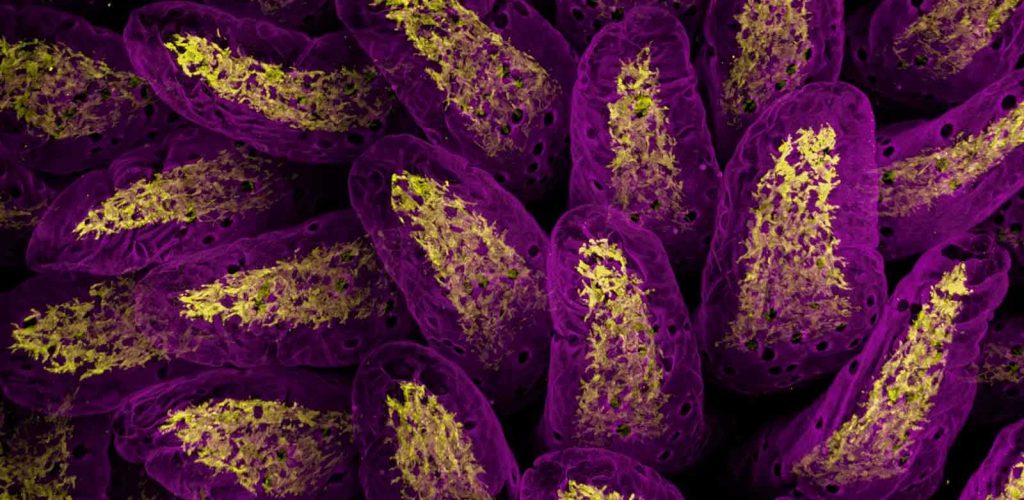
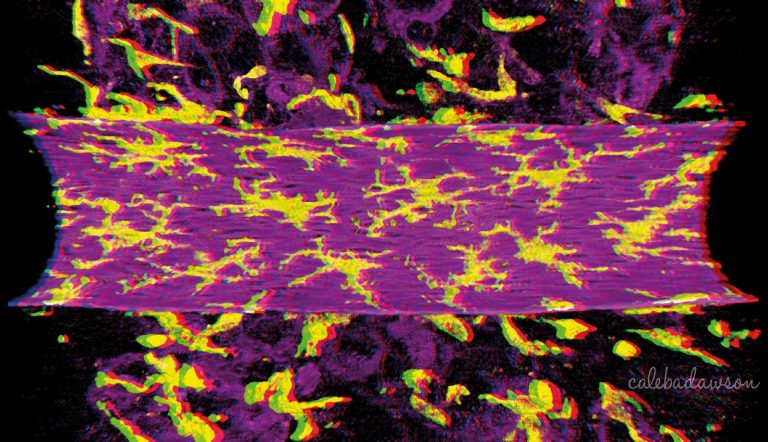
- The macrophage network inside a breast duct – Immune cells called ductal macrophages (DMs) live between the two layers of breast duct walls. This image reveals the inner surface of a duct by removing the front half. Only the outer layer is stained purple, making the yellow DM network visible across this layer.
-
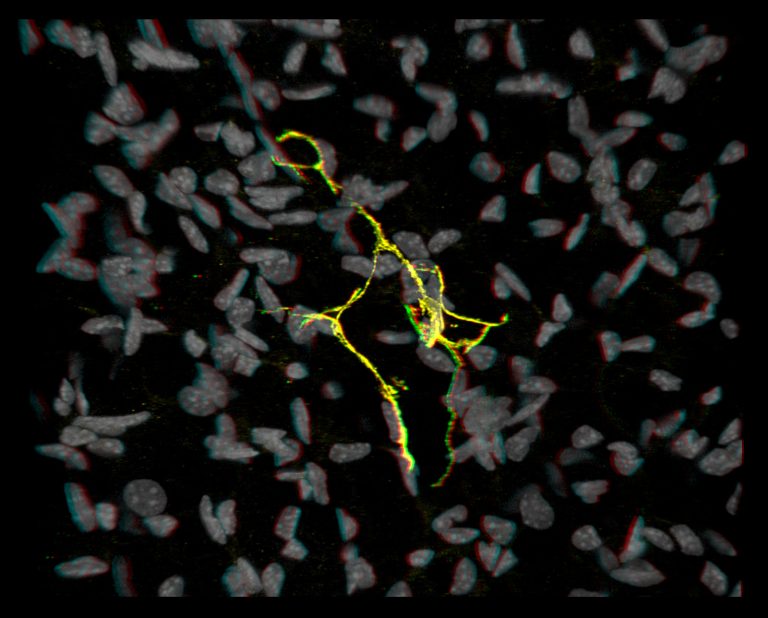
- Fibroblasts hold our organs together by secreting connective proteins. They take on complex shapes depending on their job – this one is reaching between fat cells of the breast. As well as binding tissues together, they also produce many growth factors to support cell survival and growth. They can even turn into fat cells when more are needed.
-
- Adipose – Fat cells of the breast with fluorescent proteins attached to their cell membrane.
-
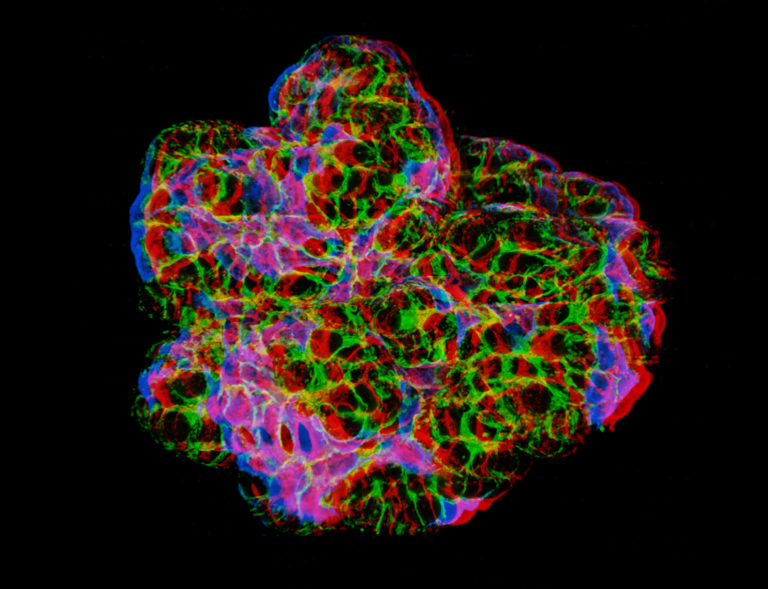
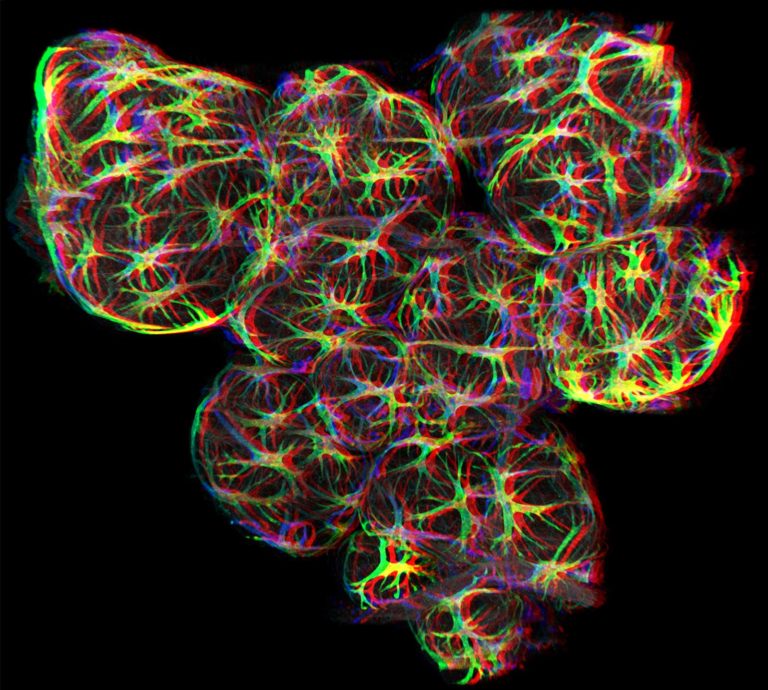
- 3D Breast Cancer Organoid: A mini breast tumour grown in a dish to replicate real cancers. Cell skeletons (actin) are shown in yellow. Magenta stem cells are marked by a specific structural protein (keratin).
-
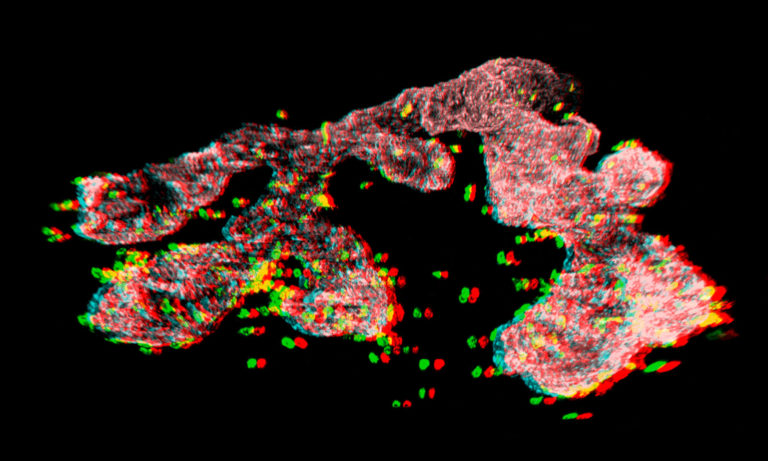
- Branching out – A rodent embryonic mammary gland (grey) and immune cells (yellow) that cluster around the growing tips.
-
- Milky Way – Breast tissue in lactation with muscle cells (yellow) and immune cells (magenta).
-
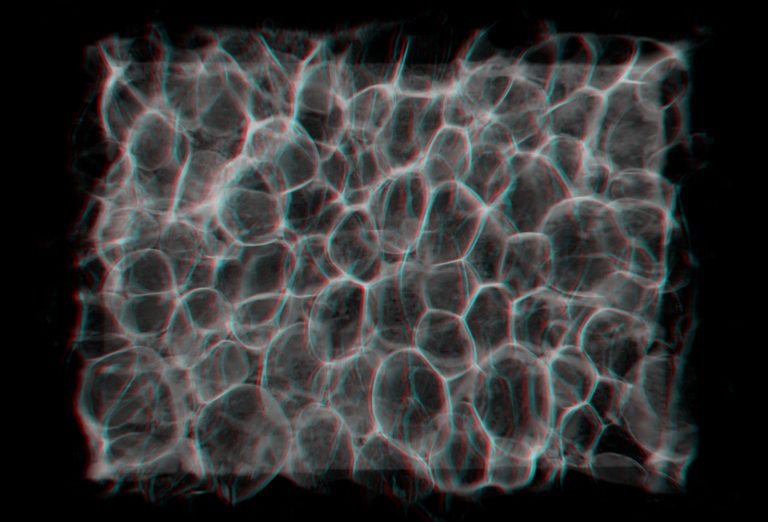
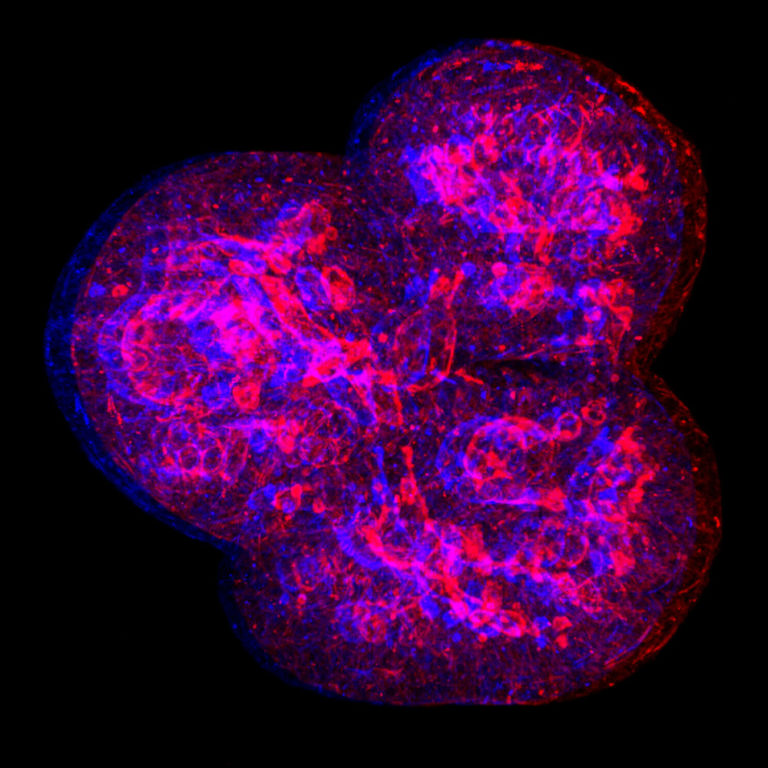
- Breast organoid – A miniature breast ‘organoid’ grown in the lab. F-actin (magenta) marks cell structure and outlines hollow spaces forming in the center.
Microscopy in cyan/red anaglyph 3D
Science is often shown in 2D, but life is 3-dimensional. 3D glasses can give an immersive experience of biology and they are cheap, work on any screen and can be used by a whole group at once. Virtual reality is an incredible but isolating experience that requires more specialised gear. Cyan/red anaglyph 3D is more accessible and is convenient for classrooms, large presentations and bringing all over the world.
How is it done?
I developed this during my PhD by using a graphics program called Imaris. This feature has always been available in the program, but it took a lot of practice to get it working well. We now bring boxes of 3D glasses to primary and secondary classrooms, local science talks, presentations for research supporters and international conferences.
Using this material yourself
Glasses are cheap on ebay. Make sure to use cyan/red glasses and not blue/red or green/red – these won’t work. The bigger the screen the better – get these on a projector if you can. Please get in touch here for more info or if you’d like me to give an educational 3D presentation.